21 fact about Gauja National Park

  • Established in 1973. The first and, for more than 20 years, the only national park in Latvia
  • The largest national park in Latvia with a total area of 91 745 ha
  • Almost all natural ecosystems typical to Latvia are represented
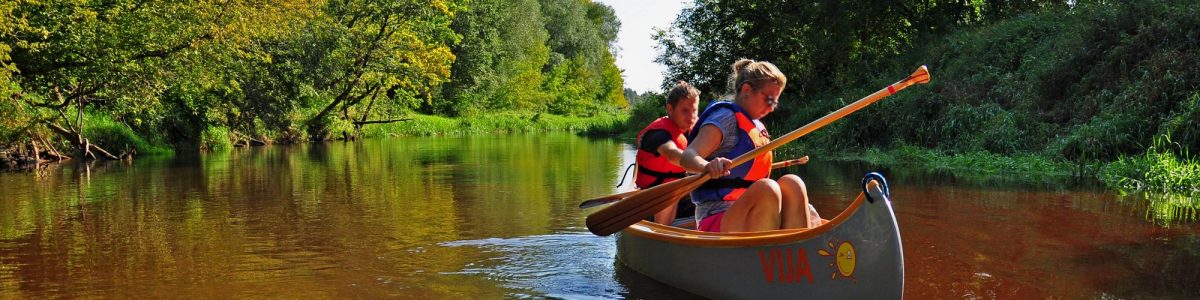
  • The Gauja is the most popular river in Latvia for water tourism
  • 166 types of lichens
  • 23 species of protected moss
  • More than 200 vertebrate species
  • 551 species of capped mushrooms 
  • 163 species of birds
  • 3780 species of insects
  • The Gauja National Park and its immediate proximity are home to 547 cultural and historical objects, among which slightly less than one-half are cultural monuments
  • The Gauja river, which is Latvia`s longest river (452 km), with 93 km of the river flowing along the ancient Gauja River valley that is in the park
  • There are no hydroelectric power plants nor are there any other manmade obstacle made on the river of Gauja
  • Home to 876 species of vascular plants
  • 45 protected biotopes, including wetlands, sandstone cliffs, ancient caves and mesotrophic lakes
  • The greatest depth of the ancient Gauja River valley is found at Sigulda, where it is up to 85 meters deep and 1 km wide
  • The ancient Gauja River valley and its tributaries feature the largest concentration of sandstone and dolomite caves in the Baltic States. The caves are protected biotopes and an important place for many species who live and spend the winter there
  • There are 19 castle hills in the Gauja National Park
  • There are 6 medieval castles ruins in the territory of the park. Sigulda itself has 3 of them
  • The park has historical objects of European importance such as the rebuilt Āraiši lake castle. It provides evidence as to how people lived 1 000 years ago 
  • An outstanding example of historical heritage is the historical centre of Līgatne, where the Līgatne Paper factory was established in 1815
visit-sigulda-gauja-national-park

Gauja National Park

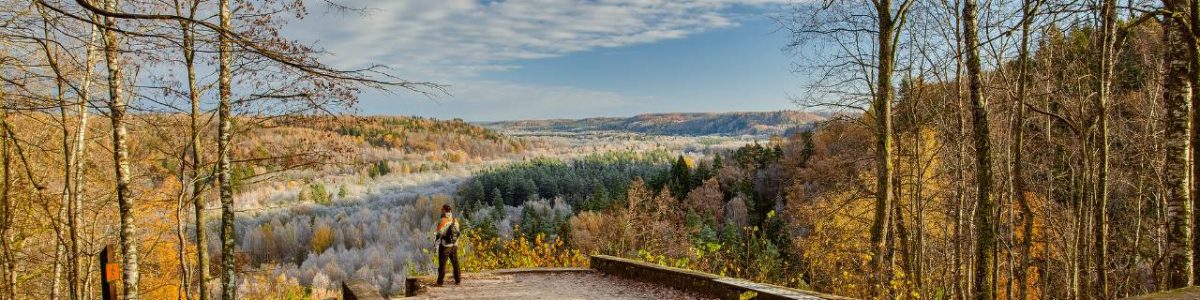
The valley of Gauja river and its many tributaries represent one of the most outstanding elements in the terrain of Latvia. It is one of the deepest and most impressive river valleys in the Baltic States. Here we find impressive sandstone cliffs from the Devonian era which cannot be found anywhere else in the region. The area has been populated since ancient times, as can be seen in the many castle hills and medieval castles and estates. This is the largest and oldest national park in Latvia. 

Canoe-kayak-rent-Gauja-Ligatne-Sigulda

The most significant part of the park is the ancient valley of the Gauja, which was formed more than 300 million years ago, but acquired its current formation about 12 000 years ago when it was transformed by glacial sediments and melting waters. In ancient times, the river was navigable and served as a trade route. Ancient Liv settlements have formed on the shores. Later, surrounded by steep slopes and deep valleys, strong stone castles were built here. Cities grew up around them, where cultural and economic life developed.

Today, the Gauja National Park is a pearl of Latvia’s nature, history, culture and tourism. Impressive sandstone outcrops on the banks of rivers, outstandingly rich natural diversity, picturesque landscapes, natural and cultural monuments, well-maintained tourist trails.

The Gauja National Park must be enjoyed without hurrying, feeling the smells, colours and tastes, enjoying the views that open from the viewpoints, and getting to know the rhythm of life of the locals. This is best done by hiking, cycling or canoeing along the Gauja and its tributaries. When planning a route through the Gauja National Park, be far-sighted, do not leave without seeing the most interesting.